Cost ofa Click
Made AI's invisible water cost physically tangible - increasing environmental awareness by 85% through sensor-driven experience design.
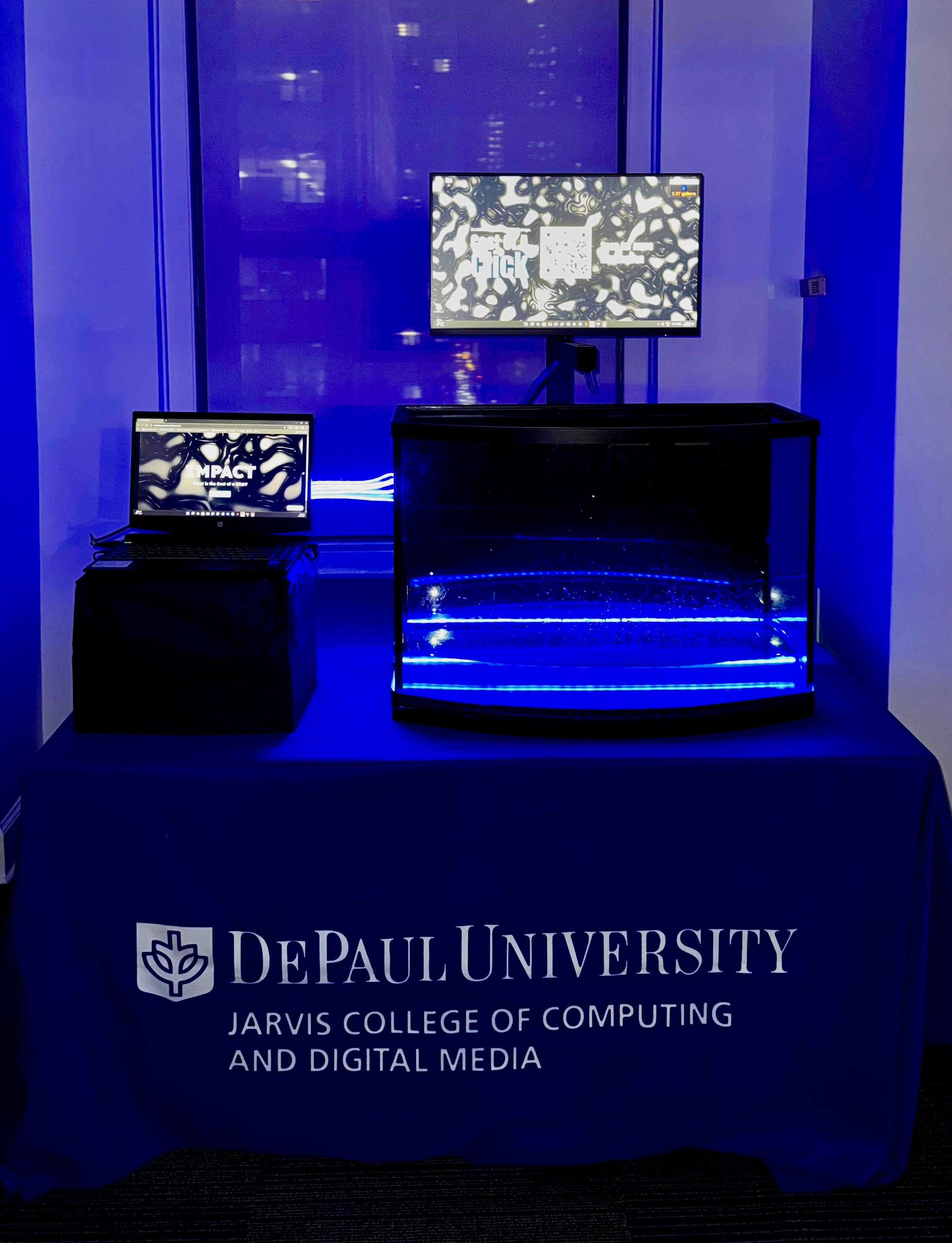
AI has a water bill.
Nobody knows.
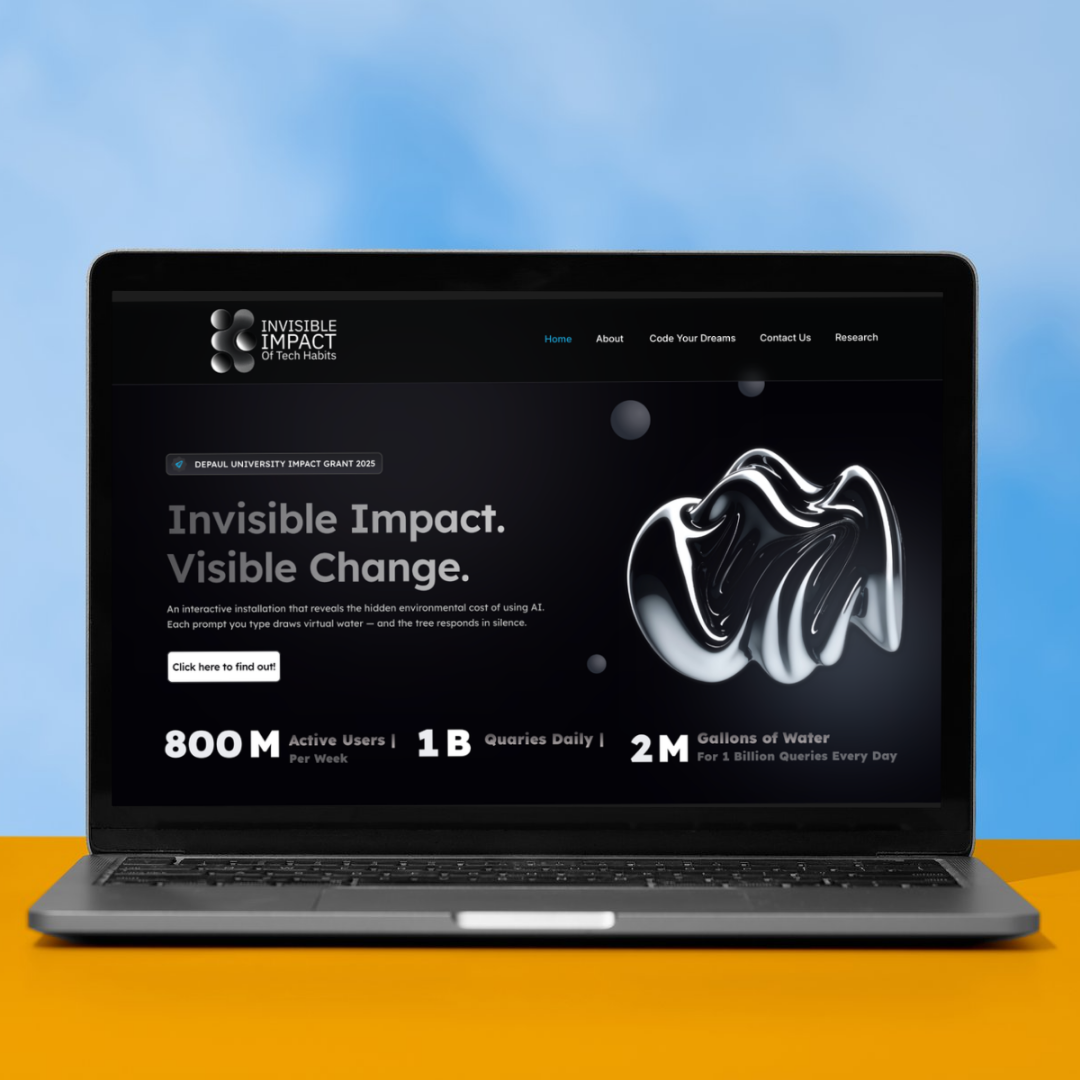
Every AI query consumes real water to cool data centre servers. In 2025, users type hundreds of prompts a week - with zero awareness of the environmental cost. Abstract facts don't change behaviour. Felt experience does.
"Abstract environmental data doesn't change behaviour. But when you watch the water pour - you feel it."
How might we make the invisible cost of AI felt - not just understood - so people can make informed choices?
Seven phases.
One clear arc.
Each phase was sized to the problem - discovery-heavy at the start, refinement-intensive at the close.
- Desk research on AI energy use
- Secondary data synthesis
- Problem framing
- 15 semi-structured interviews
- Survey (n=42)
- Journey mapping
- Concept ideation (3 directions)
- Physical + digital prototyping
- Figma flows
- Arduino build
- Sensor integration
- Lab usability test
- Iteration
- Field test
- Refinement
- DePaul Showcase
- Impact measure
Why physical + digital?
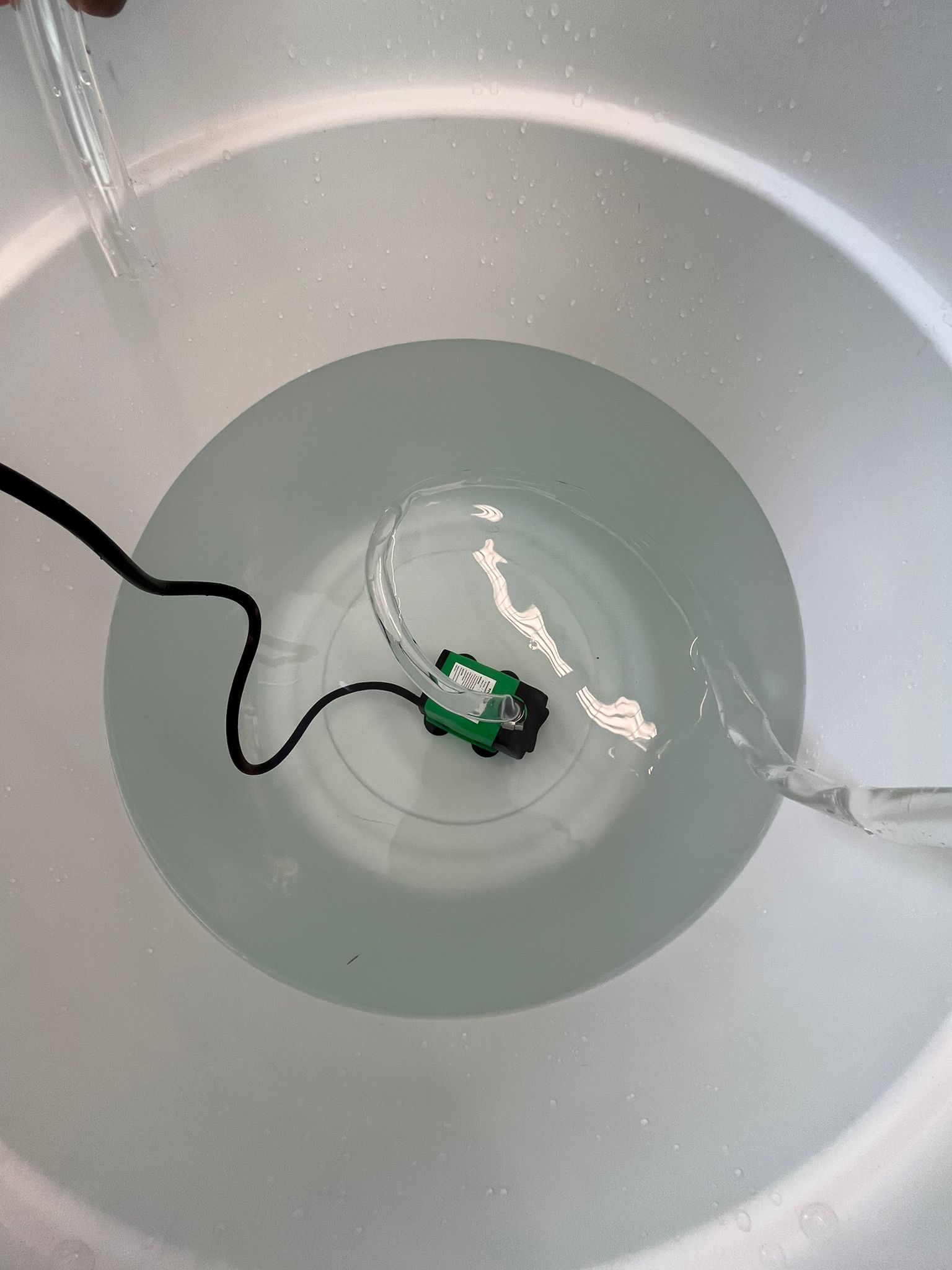
Watching real water pour proportional to your query creates visceral, embodied understanding - impossible to achieve with a number on a screen.
A tree withering on screen as users type creates a real-time cost metaphor - making systemic impact personal and immediate.
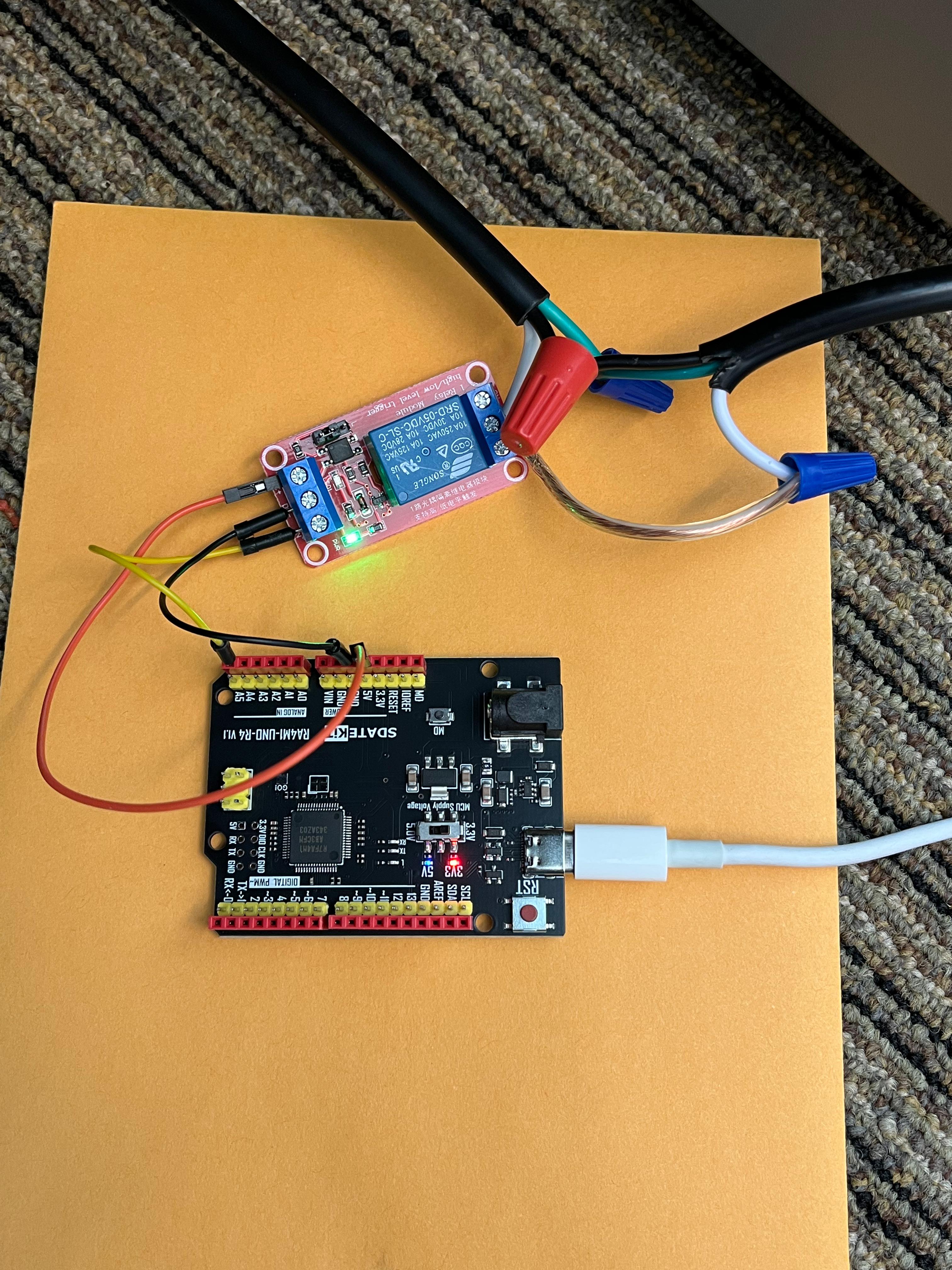
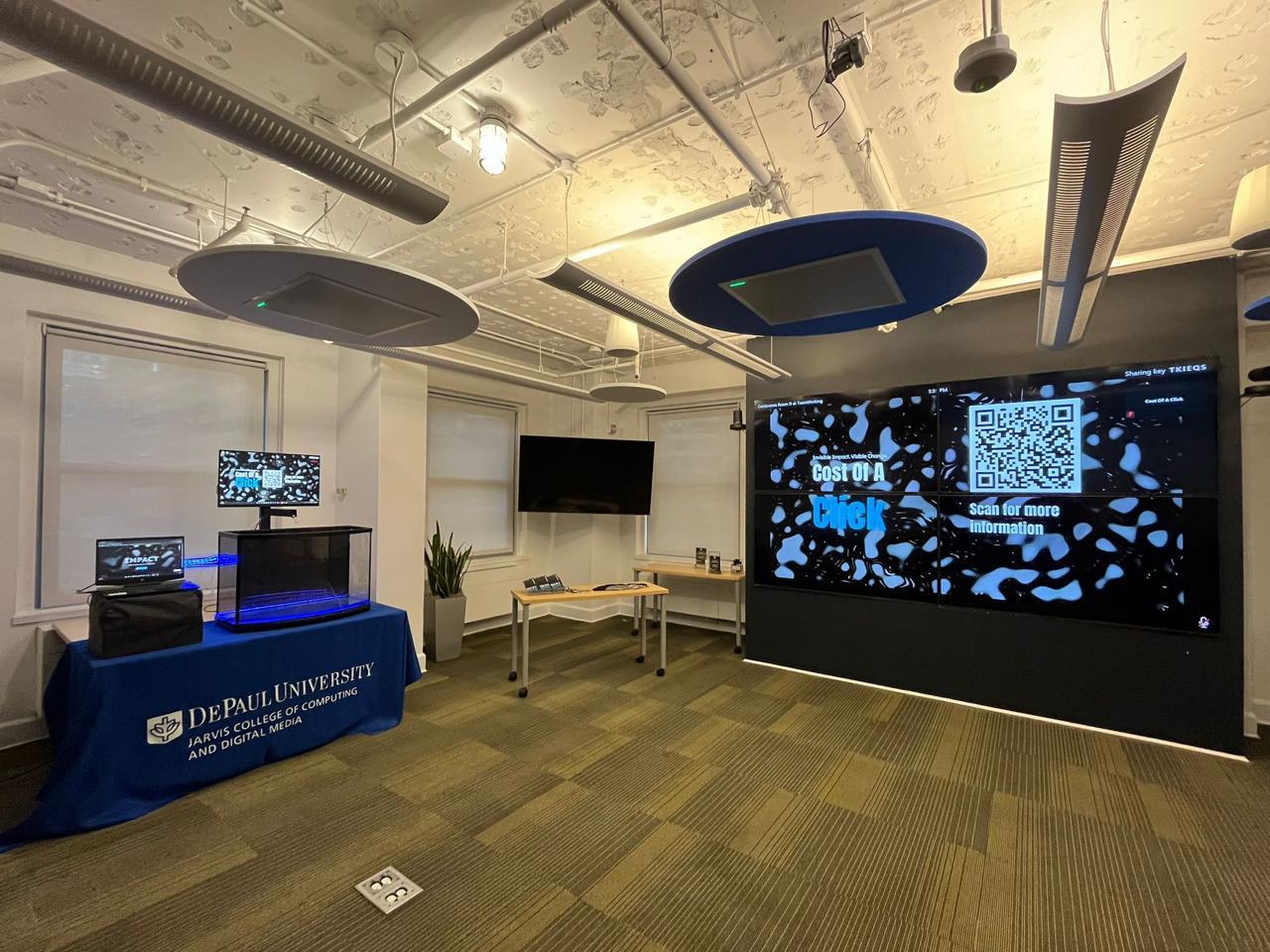
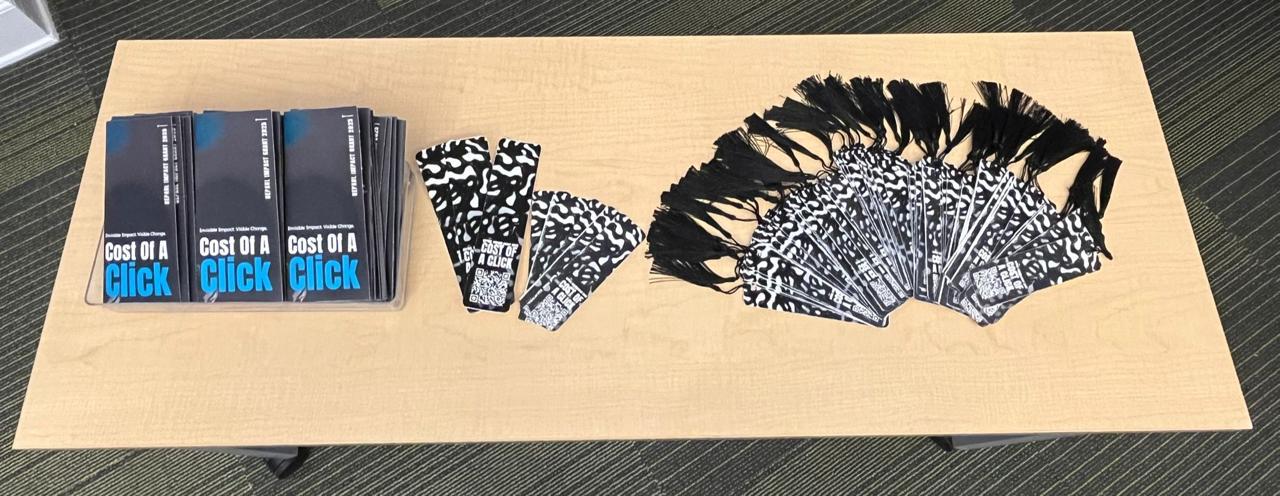
From sensor
to experience.
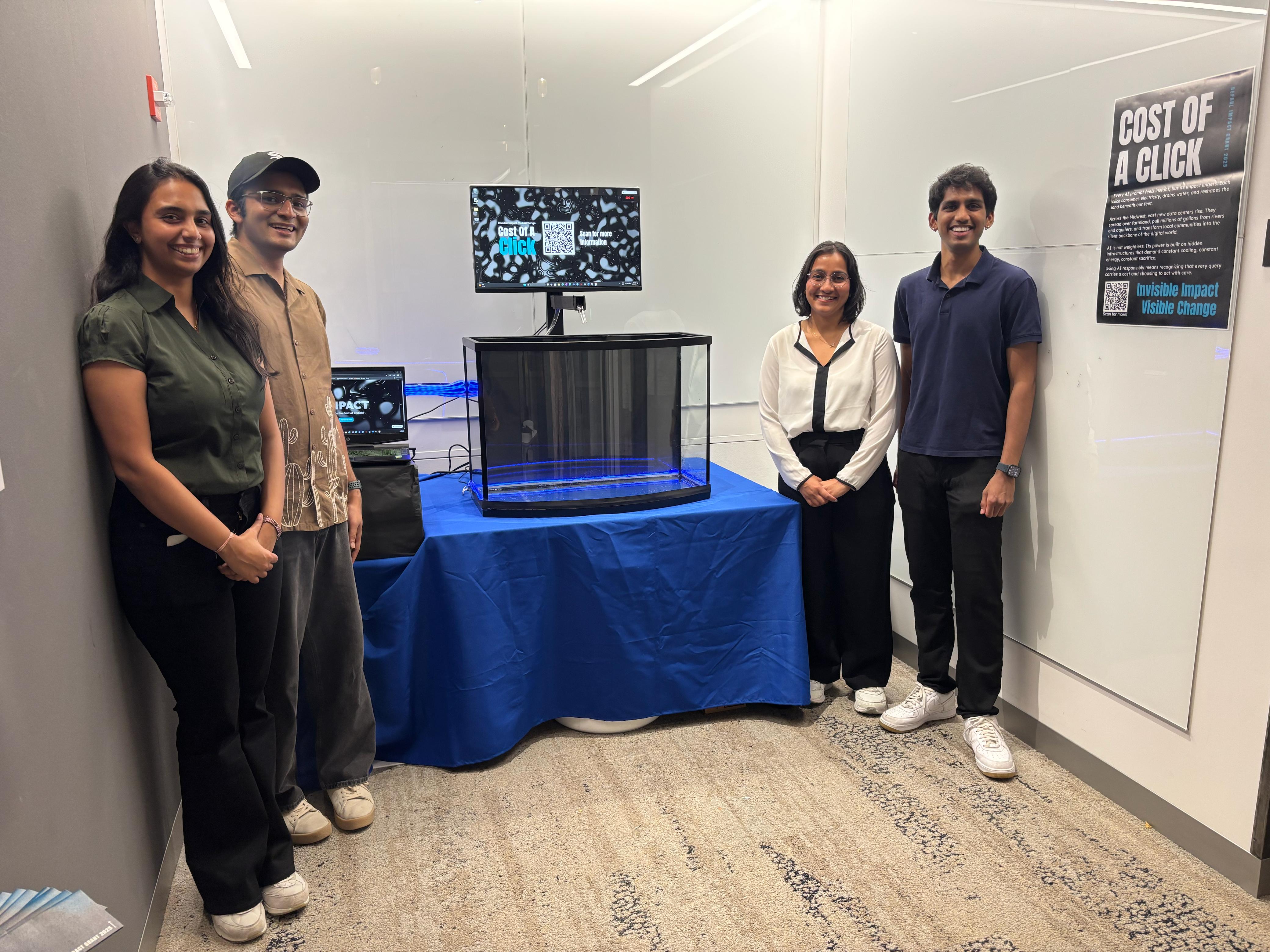
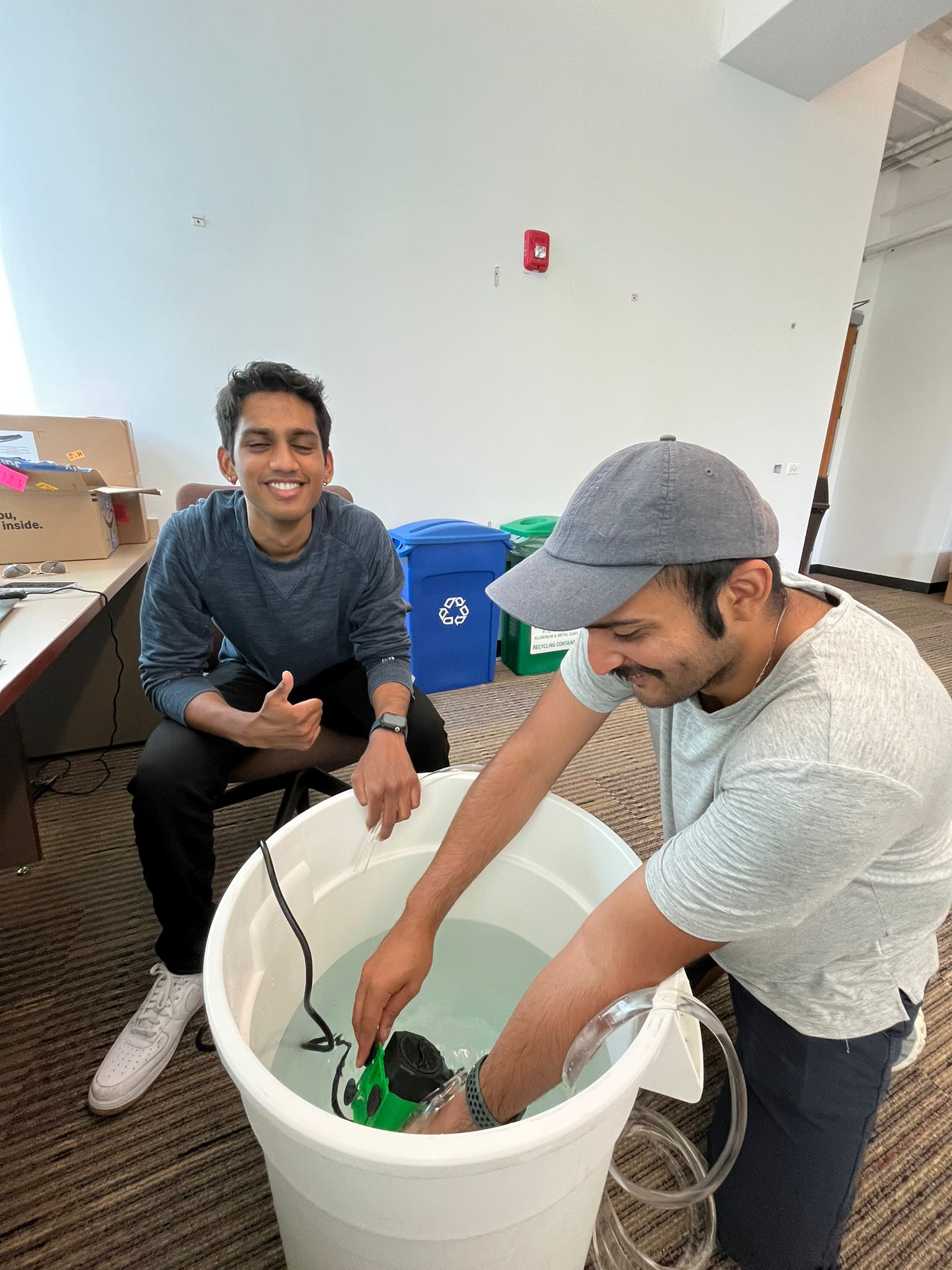
DePaul Summer
Showcase 2025
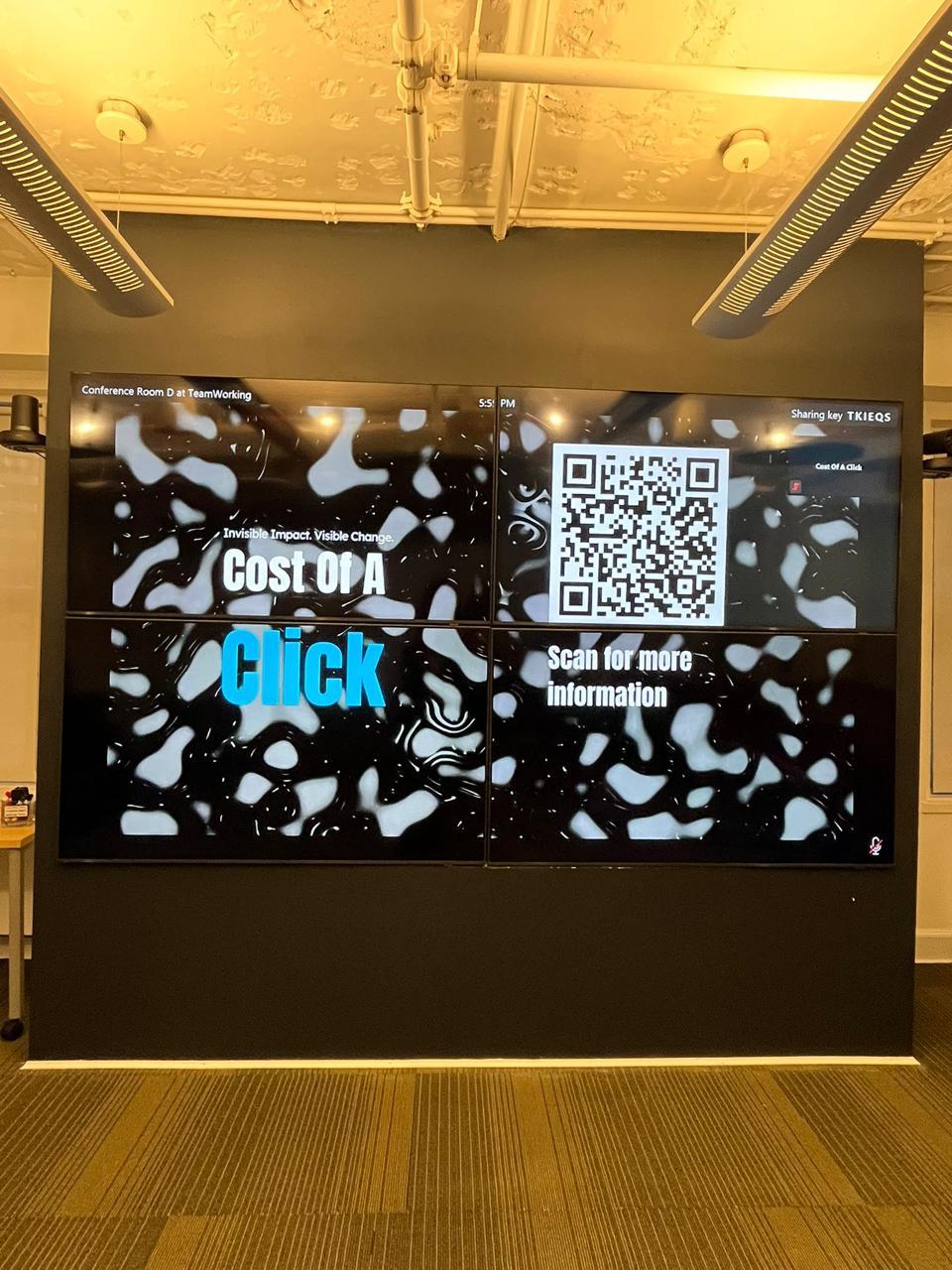
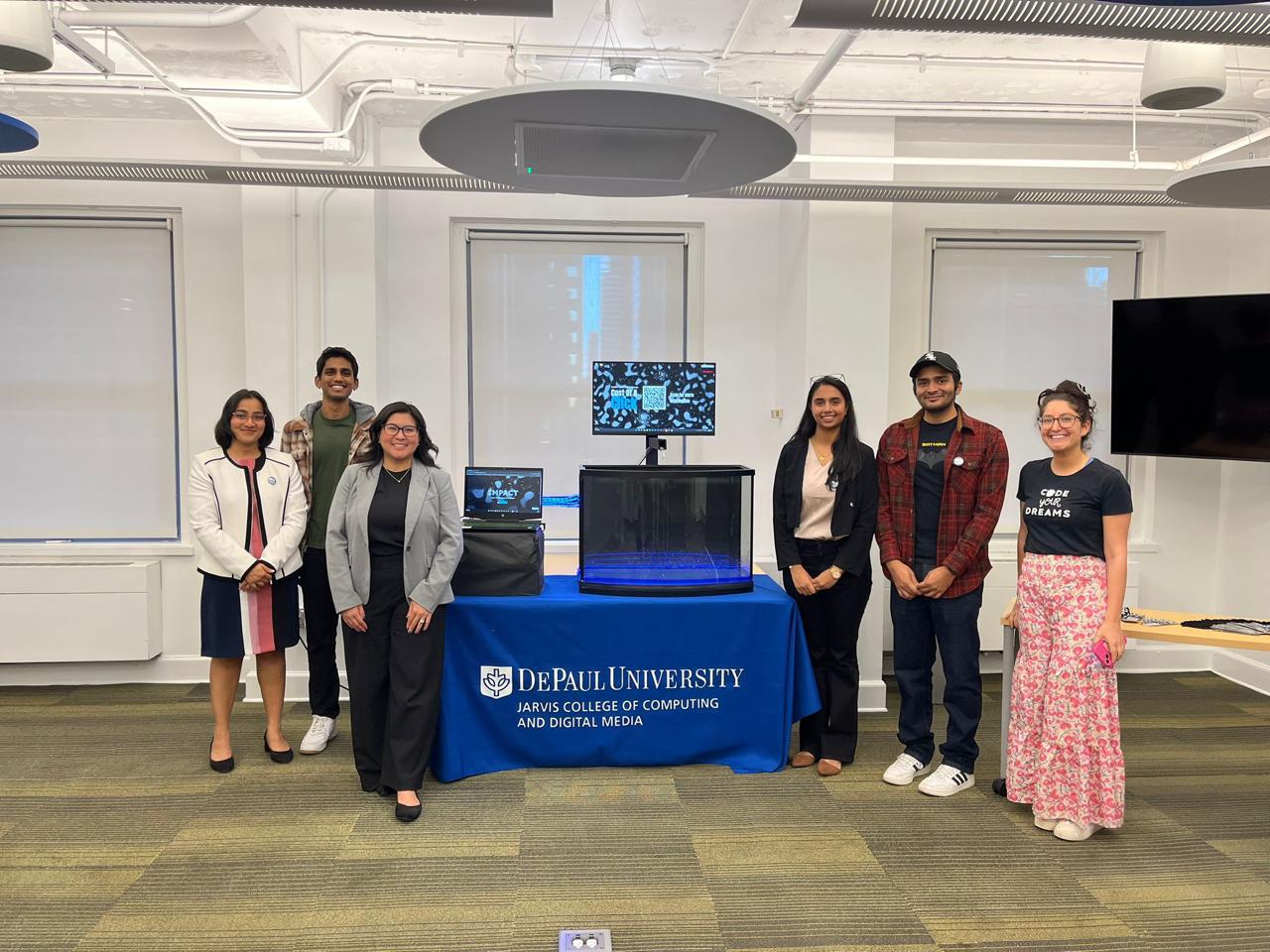
The internet
paid attention.
After the DePaul exhibition, footage of Cost of a Click spread on TikTok and reached 6 million views - sparking a global conversation about AI's hidden environmental cost.
Originally posted by @thetshegofatso on TikTok · 6M+ views · 2025
Numbers that
moved people.
Of participants reported changed awareness of AI's environmental footprint after interacting with the installation.
Committed to more mindful AI usage - specifically reducing unnecessary or casual queries.
Increase in self-reported informed decision-making about when to use AI tools.
Competitive research grant awarded for the proposal to make AI's environmental cost tangible through experience design.
Installation exhibited to students, faculty, and public. 85% awareness increase measured through exit surveys.
Exhibition footage circulated widely on social media - extending the research's reach beyond the academic context.
What this project
taught me.
Physical sensation anchors awareness in a way abstract data never can. Design the experience, not the information.
Combining UX research methods with physical computing required fluency in both domains. The research shaped the hardware decisions as much as the design ones.
Two rounds of usability testing before exhibition caught critical friction points in the physical interaction - including water spillage, prompt timing, and screen readability.
Designing for environmental awareness means the research itself had to be ethically grounded - consent-first, never alarmist, always actionable.
Next project: VR mental wellness companion - 71% student validation, showcased at Jarvis Innovation Challenge.
See Wellnut →