Case study · Raahi
Raahi
Spot it. Fix it.
An AI browser plugin that helps UX practitioners detect, document, and explain dark patterns while reviewing live websites.
Raahi turns a practitioner’s instinct — “something about this experience feels manipulative” — into documented, defensible evidence.
- Product Designer + Co-founder
- 16 weeks
- Design · Engineering · Legal · Data Science
- Figma · Miro · Notion · Forms
The outcome
From “I know a dark pattern when I see one” to evidence a team can act on.
Raahi gives UX practitioners a systematic way to identify and document manipulative interface patterns while reviewing live websites.
Instead of relying on gut feel, checklists, or disconnected notes, practitioners can flag a pattern directly in the browser and connect it to a shared taxonomy.
Notice
“I think this is manipulative.”
Detect
Raahi identifies a potential pattern.
Classify
Coercive · Deceptive · Addictive
Document
One click creates evidence.
Discuss
Bring the evidence to a stakeholder.
Why it mattered
Practitioners could recognize manipulation. They couldn’t consistently prove it.
- of surveyed practitioners regularly encounter dark patterns
- 78.9%
- practitioners surveyed across the US and India
- 57+
- in-depth practitioner interviews
- 12
Qualifier: the survey sample was self-selected through a university network. Findings are directional, not statistically representative.
- No consistent vocabulary
- No systematic documentation
- No evidence
“I know dark patterns when I see them — but I have no systematic way to document or prove it to a stakeholder.”
The workflow
From manual review to evidence inside the browser.
Before
- Live website
- Notice something
- Screenshot / notes
- Remember what happened
- Explain later
- Debate terminology
- Try to prove the issue
After
- Live website
- Raahi detects
- Practitioner flags
- Taxonomy classifies
- Evidence is recorded
- Stakeholder conversation
Raahi didn’t ask practitioners to adopt a new review workflow. It put detection inside the workflow they already had.
The product
Detection happens where the review happens.
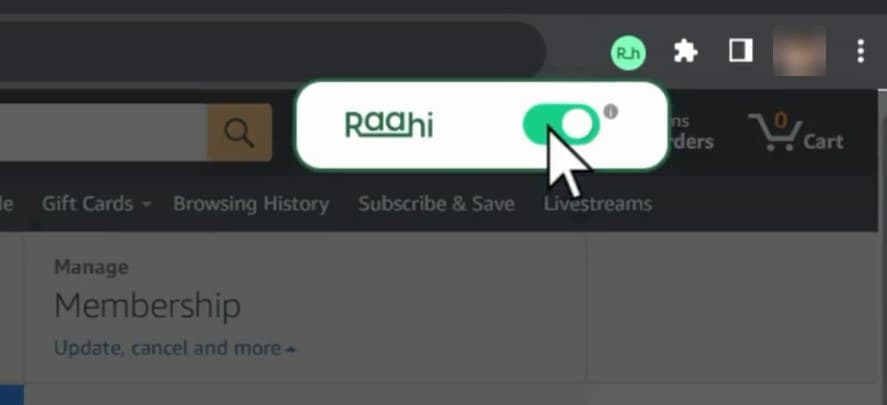
Raahi runs as a browser plugin, scanning websites in real time and surfacing potential dark patterns as they appear. A practitioner can flag the pattern directly from the page and connect it to the product’s shared taxonomy.
- 01
Detection
Potential dark pattern surfaced while browsing.
- 02
Toolbar
Raahi stays available without taking the practitioner away from the website.
- 03
Taxonomy
Every flag maps to a consistent category.
- 04
Evidence
A flagged pattern becomes something the practitioner can document and discuss.
Product model
One vocabulary. One workflow. One source of evidence.
Coercive
Patterns that pressure users into an action.
Deceptive
Patterns that obscure, misrepresent, or manipulate information.
Addictive
Patterns designed to encourage repeated or excessive engagement.
The taxonomy became the backbone of the product because research showed that “dark pattern” meant different things to different practitioners.
Without a shared vocabulary, detection could not scale consistently.
Research
12 interviews. 57+ surveys. One product direction.
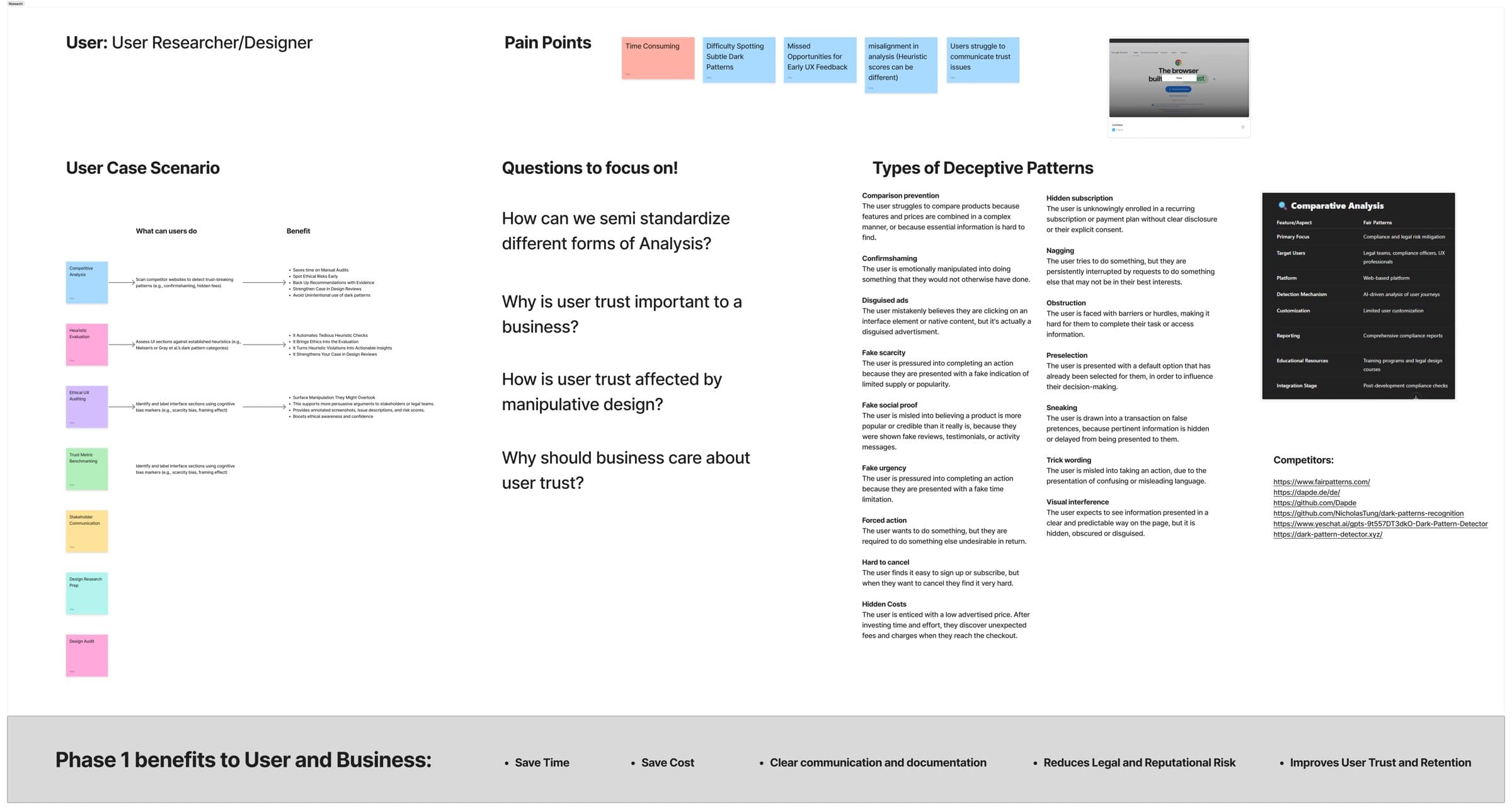
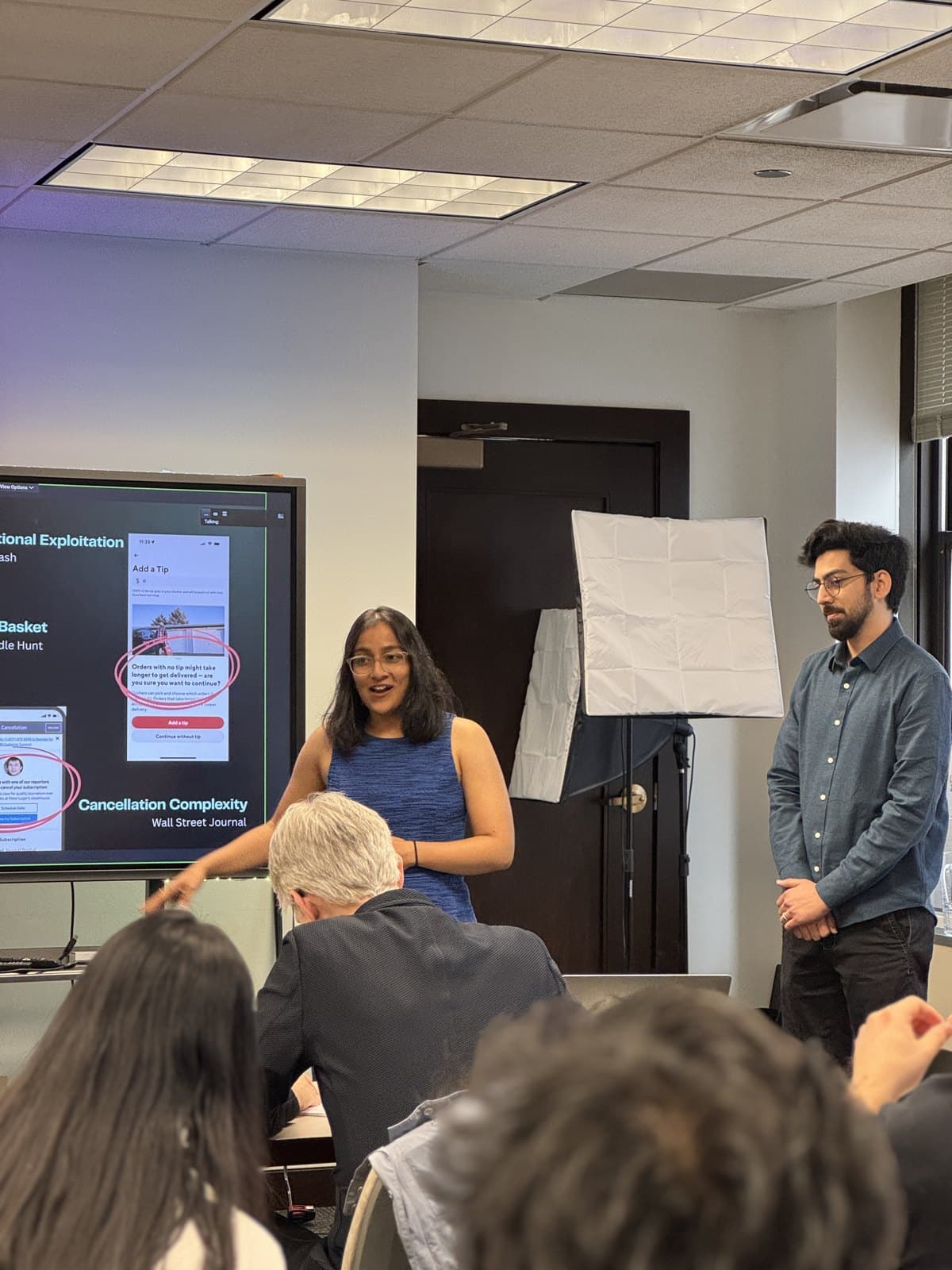
I combined practitioner interviews with a broader survey to understand how UX professionals identify and document dark patterns.
The important finding wasn’t simply that practitioners wanted a tool. It was who needed it, where they worked, and what was missing from their current workflow.
12
interviews
Recurring workflow patterns
57+
survey responses
Directional validation
5 product-relevant findings
- 1
Language was missing
“Dark pattern” meant something different to every practitioner.
- 2
Review happens in the browser
A tool that lives anywhere else doesn't get used.
- 3
Instinct without proof
Practitioners knew — they couldn't prove it to a stakeholder.
- 4
Speed is the problem
Manipulation works because it's invisible in the moment.
- 5
The lever is upstream
Reach the reviewer before the pattern ships.
Research → product
Research didn’t validate the original idea. It changed it.
- 01
Browser plugin, not standalone app
Practitioners would use a standalone review application.
Practitioners review live websites inside the browser.
Move detection into a browser plugin.
Raahi works where the review already happens.
- 02
Shared taxonomy
“Dark pattern” was already a shared vocabulary.
Practitioners used the term differently.
Create a three-tier taxonomy.
Every flag resolves to a consistent category.
- 03
Evidence, not just flags
Flagging the pattern was enough.
Practitioners could identify patterns but struggled to prove them to stakeholders.
Turn each flag into evidence.
A practitioner's instinct becomes something they can document and discuss.
Product strategy
Three decisions shaped the product.
Browser plugin, not standalone app
- Practitioners already review live websites in-browser.
- Less freedom than a dedicated review environment.
- Workflow fit mattered more than surface area.
Practitioner-first, not end-user
- One practitioner can influence thousands of users downstream.
- The product does not directly protect an individual user at the moment of manipulation.
- Move the intervention upstream, before harmful patterns ship.
Shared taxonomy
- Detection needs a stable vocabulary.
- A taxonomy necessarily compresses nuance.
- Consistency and defensibility were more valuable than individual terminology.
My role
I connected the research, product strategy, and experience.
As Product Designer and Co-founder, I worked across research, product strategy, UX, and cross-functional decision-making.
I wasn’t only designing the interface. I helped determine who the product was for, where it should live, what it should detect, and how a detection becomes usable evidence.
Research
- 12 interviews
- 57+ survey responses
- Affinity mapping
Product strategy
- Practitioner-first scope
- Browser-first workflow
- Taxonomy
UX / Product design
- Detection card
- Toolbar
- Flag-to-evidence flow
- Information architecture
Collaboration
- Design
- Engineering
- Legal
- Data Science
Delivery
- Product specifications
- Prototype
- Practitioner validation
The process
A research-led process with decisions tied to evidence.
01Discover
Interview practitioners; survey the wider field.
02Synthesize
Affinity-map findings; find recurring workflow gaps.
03Define
Choose the user, workflow, taxonomy and scope.
04Design
Detection, taxonomy, toolbar and evidence flow.
05Validate
Bring decisions back to practitioners.
06Prototype
Build the model into a working browser prototype.
Core interaction
One click turns a hunch into evidence.
- 01
Practitioner encounters a potential dark pattern.
- 02
Raahi surfaces the detection.
- 03
Practitioner reviews the flag.
- 04
Pattern is classified using the shared taxonomy.
- 05
The flag is recorded as evidence.
- 06
Evidence supports a stakeholder conversation.
Detection alone isn’t enough. The useful outcome is defensible documentation.
The prototype
Raahi works inside the browser, not beside it.
A working prototype demonstrates the core interaction: detecting a potential pattern in context, classifying it, and turning the observation into documented evidence.
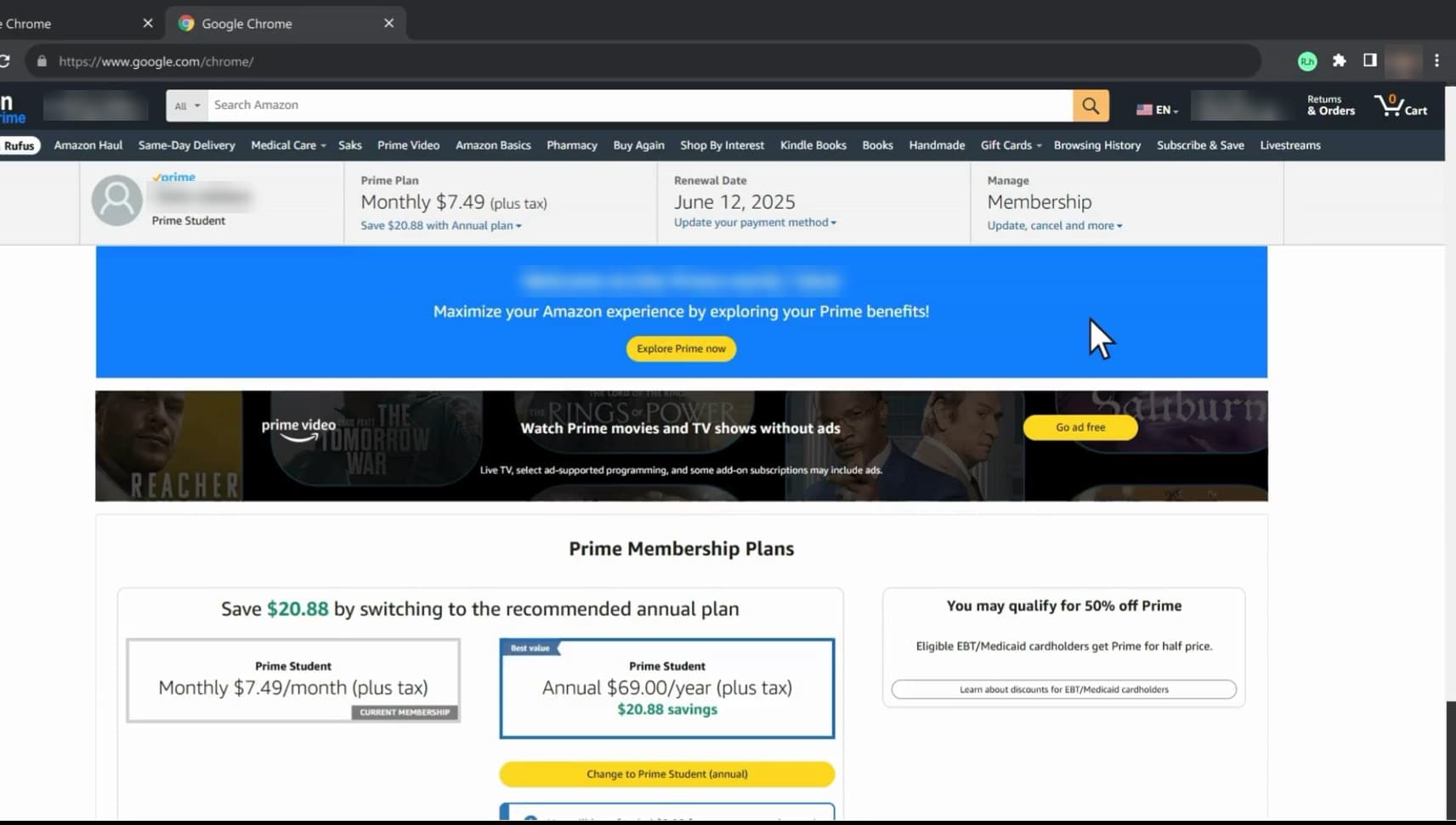
1Live website
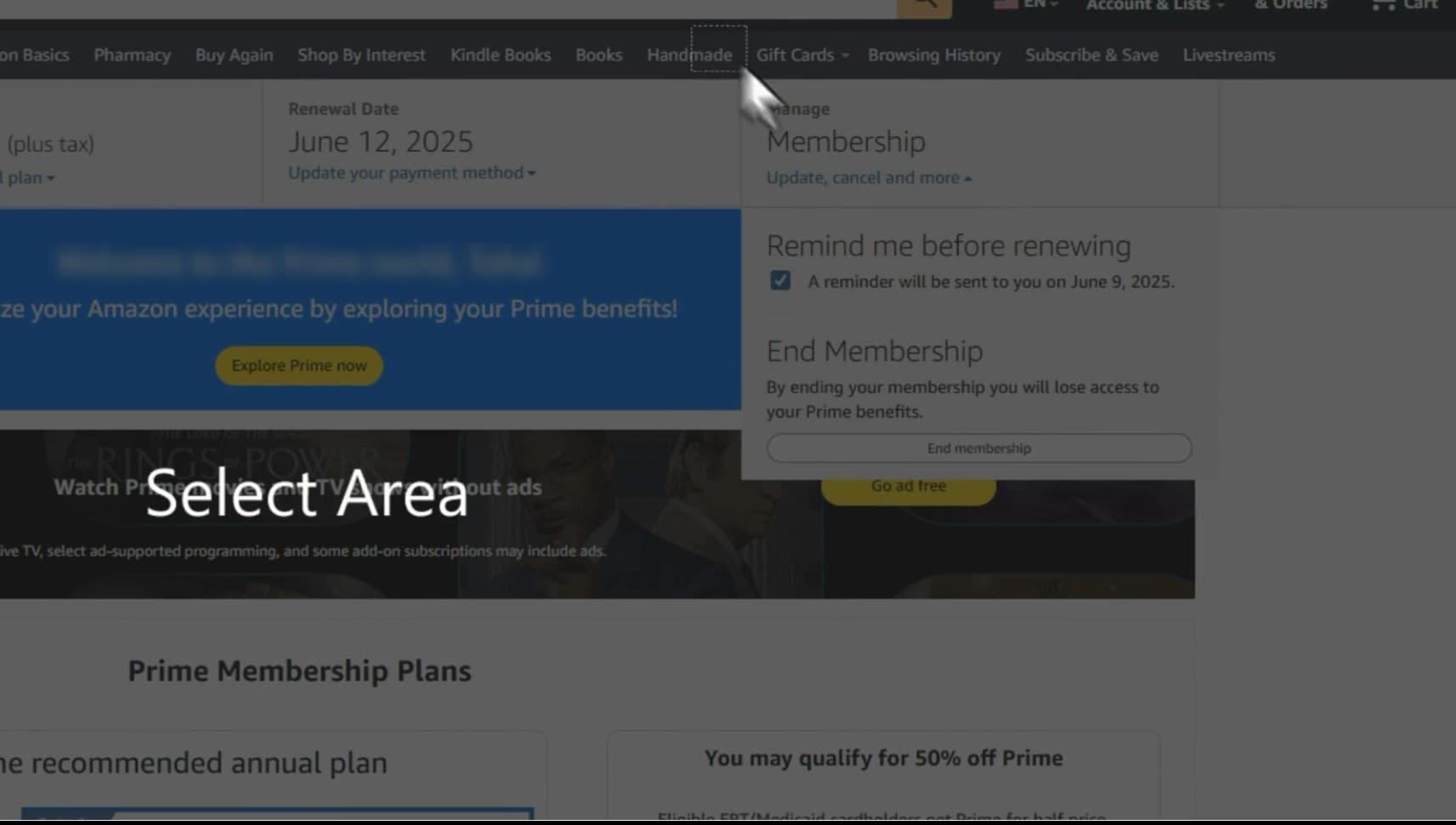
2Raahi detection
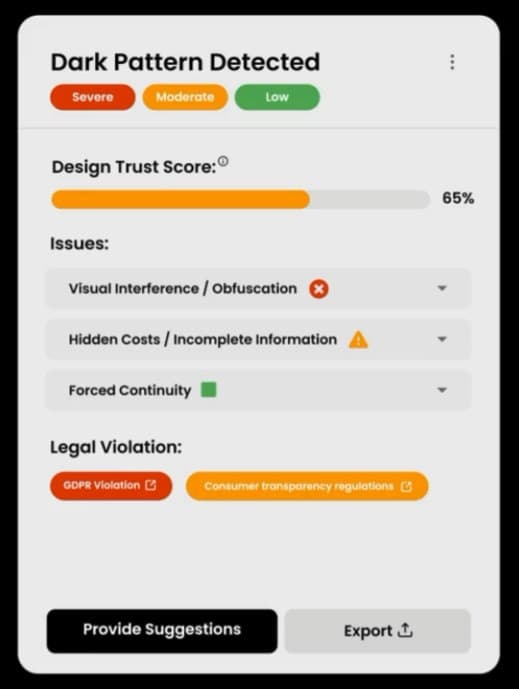
3Detection card
4Classification
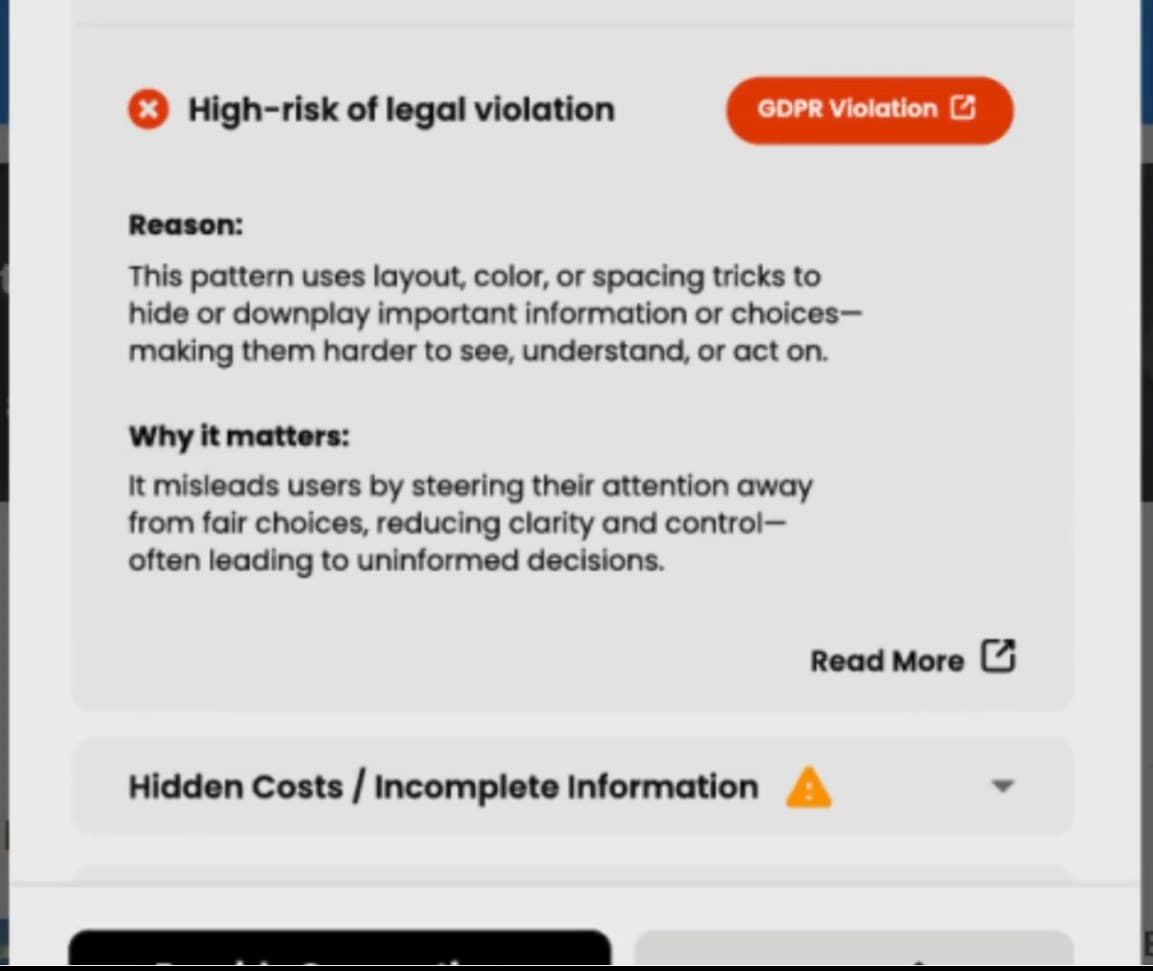
5Evidence
Recorded on a teammate’s own account; their name and delivery details are blurred in the stills.
If this product shipped
The real test wouldn’t be installs. It would be whether practitioners use the evidence.
Raahi is a working prototype, not a shipped commercial product. There are therefore no adoption or business-impact numbers to claim.
The right success criteria would be behavioral.
Sustained use
Do practitioners keep Raahi active after the initial novelty?
In-workflow detection
Are flags created during real website reviews rather than demonstrations?
Evidence creation
Do flagged patterns make it into stakeholder conversations?
Detection credibility
Are detections accurate enough that practitioners trust them?
Taxonomy coverage
Can the taxonomy evolve as new patterns emerge without losing consistency?
Before shipping
The hardest problem isn’t detecting more. It’s detecting accurately enough to be trusted.
Detection accuracy
False positives could undermine practitioner trust.
Taxonomy expansion
The three-tier taxonomy will need to evolve as new patterns emerge.
Generalizability
The research sample needs broader validation beyond the self-selected university network.
Real-world adoption
Stated intent to use is not evidence of sustained use.
Privacy / operational considerations
A production browser tool would need careful decisions about what websites and browsing information are processed.
What’s next
The next step is testing whether the concept holds up in real practice.
Broader practitioner validation
Test the product direction with a more diverse practitioner sample.
Stronger detection
Improve detection accuracy and evaluate false positives and false negatives.
AI dark-pattern coverage
Extend the taxonomy and detection model to manipulation patterns emerging in generative AI interfaces.
The follow-on research is now studying how dark patterns emerge in generative AI, with the longer-term goal of feeding those findings back into the product model. I’m leading a team of five with two faculty advisors; the study is in data collection, targeting CHI 2027.
Final thoughts
Make manipulation visible before it ships.
Raahi started with a simple gap: practitioners could recognize dark patterns, but they lacked a consistent way to document and prove them.
The product turns that gap into a workflow — detect, classify, document, and act.
Wellnut