Case study · Wellnut
Wellnut
A private place to pause, talk, and breathe.
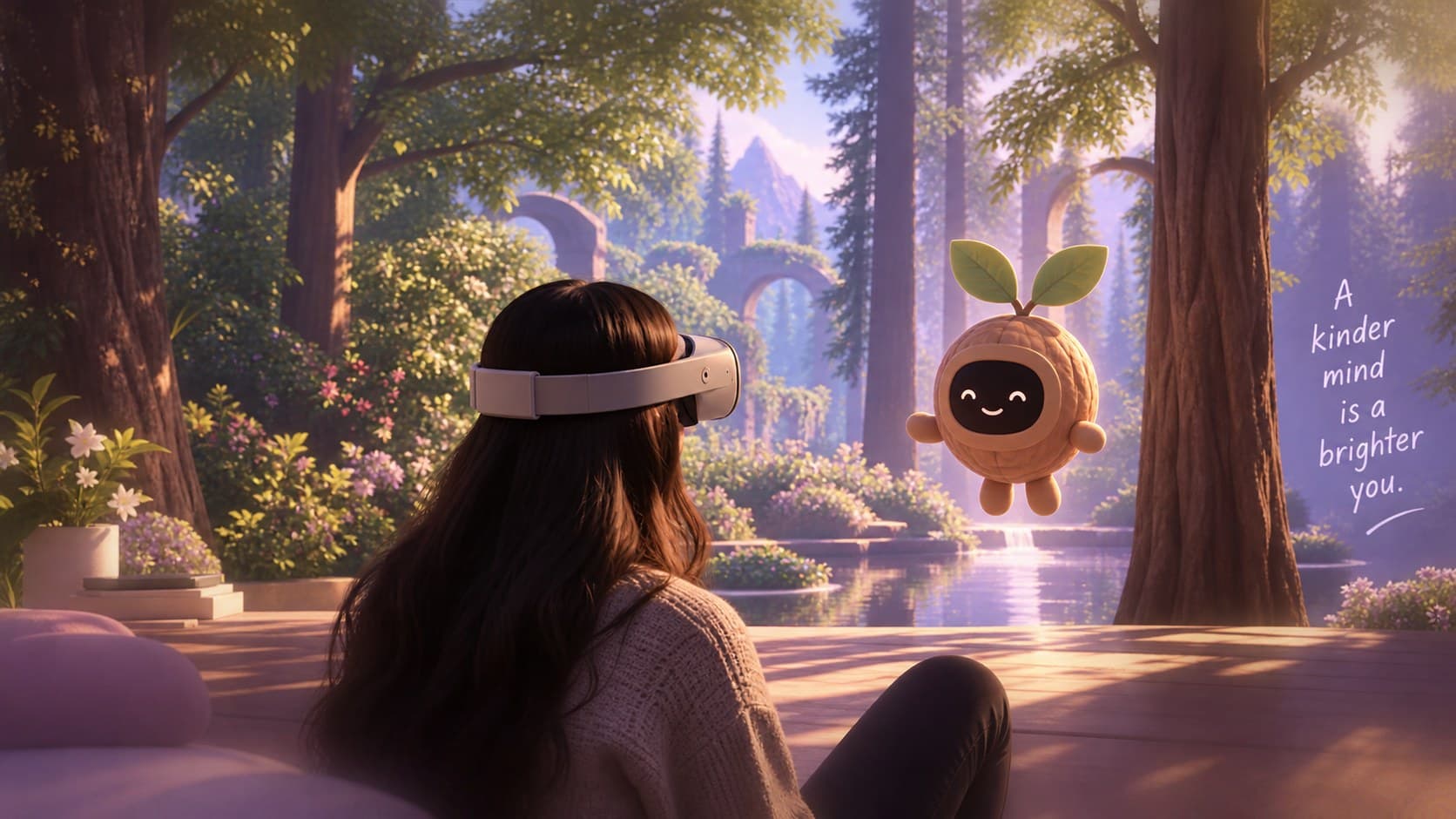
A VR companion that gives students a low-friction, judgment-free way to pause, reflect, and reach guided support — before they hit a crisis point.
No appointment, no stigma, no waiting list.
- UX Researcher + Project Coordinator
- 6 months · Nov 2024 – May 2025
- UX Research · Unreal Dev · Environment Art · Character Art · Audio
- Unreal Engine · Maya · Google Forms · Perforce
The outcome
We turned a support gap into a focused VR experience.
Wellnut became a working VR prototype: a private environment, an empathetic avatar, emotion-based dialogue, and guided meditation.
The goal was never to recreate campus counseling in VR. It was to make the first step toward support feel easier.
- students surveyed, across 6 disciplines
- 33
- saw value in VR-based meditation for exam stress
- 71%
- from first literature review to live showcase
- 6 months
- focused MVP, instead of five unfinished features
- 1
Free services · appointments · counseling · campus resources
Stigma · no time · independence · uncertainty about asking
Private environment · immediate interaction · acknowledgement · guided meditation
Why it mattered
The problem wasn’t that support didn’t exist. The barrier came before the first step.
Stigma
Fear of judgment from peers and faculty.
Time
48% cite no time for traditional support.
Independence
67% prefer handling things on their own.
Uncertainty
Not knowing where or how to start.
58%
of students with chronic stress had never accessed an on-campus mental health service — despite it being free.
Qualifier: figures come from a 33-student survey at a single institution, plus secondary research. They are directional, not statistically representative.
The opportunity wasn’t another resource directory. It was a lower-friction entry point to support.
Product strategy
We weren’t designing a replacement for therapy. We were designing what comes before it.
Traditional support journey
- Feel stressed
- Decide whether to seek help
- Find a resource
- Book an appointment
- Wait
- Talk to someone
The Wellnut journey
- Feel stressed
- Enter a private environment
- Choose how you feel
- Be acknowledged
- Reflect
- Practice guided meditation
- Take the next step, if needed
Reduce the friction of starting — without pretending the product replaces human care.
Research → product
Research didn’t just validate the concept. It changed what we built.
A 33-student survey across six disciplines told us what students needed. A licensed therapist told us how to deliver it. Neither alone was enough.
33
students surveyed
What the barriers were
1
therapist consultation
How support should feel
One focused experience
Private environment → acknowledgement → guided practice.
- 01
Why VR
71% saw value in VR meditation for exam stress and performance.
Use VR as the primary environment.
A private, enclosed experience takes the social friction out of asking for support.
- 02
Why an avatar
Students wanted immediate, independent support.
Introduce an always-available avatar companion.
The avatar sits between “I'm struggling” and “I need formal support.”
- 03
Why talk before meditation
Students need to feel heard before they can receive guidance.
Make acknowledgement the first step.
Validate the emotional state before suggesting a technique.
The experience
A focused journey from emotion to regulation.
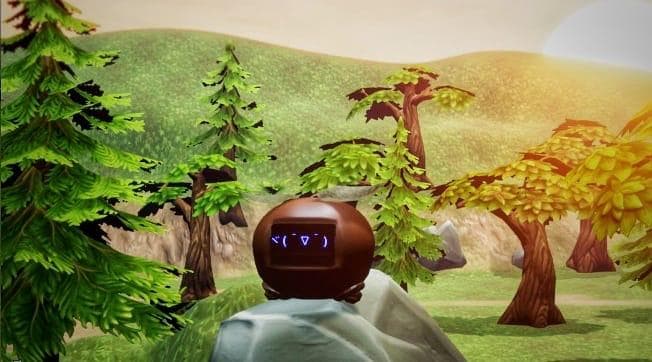
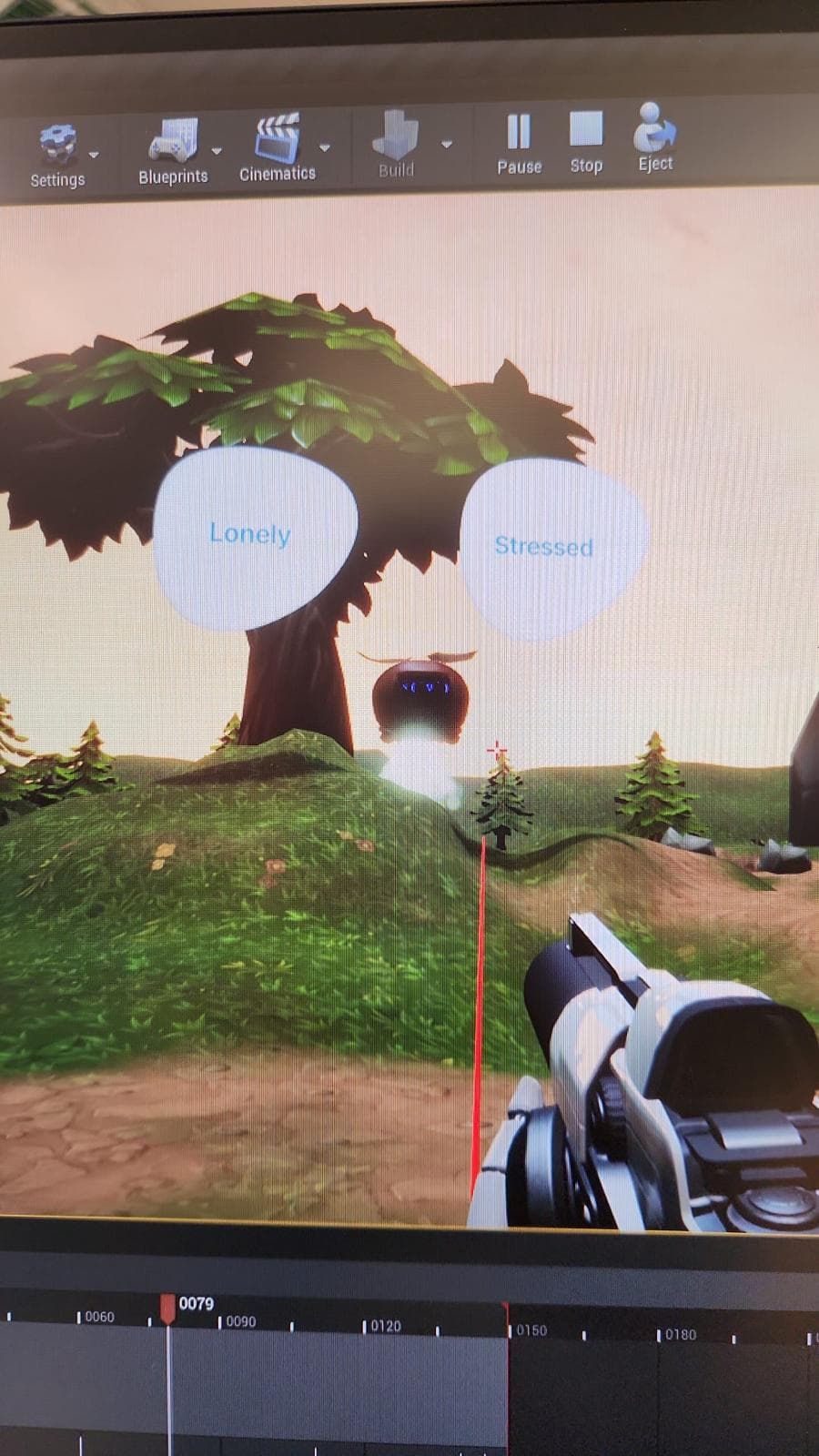
Six steps, built as one continuous experience: arrive in the forest, say how you feel, be acknowledged, reflect, breathe, and leave with a next step.
- 01
Arrive
Enter the private forest environment.
- 02
Express
Choose an emotion — Lonely or Stressed.
- 03
Be heard
The avatar acknowledges what was expressed.
- 04
Reflect
The conversation adapts to that emotional state.
- 05
Practice
Move into guided meditation and breathing.
- 06
Continue
End with an appropriate next step — including encouragement toward human support.
Conversational design
Validate first. Guide second.
Originally the avatar moved straight from emotion selection into meditation. The therapist consultation added a step in between.
“I’m stressed. Everything feels like a lot right now.”
“That sounds really tough. You’re not alone in feeling this way. Would you like to take a moment to breathe together?”
- Acknowledge
- Listen
- Guide
Clear expectations
Session duration, privacy, and limits stated upfront. Uncertainty breeds anxiety.
Active listening cues
Mirror the student's own words. If they say “stressed,” the avatar says “stress.”
Validate, then act
“That sounds really hard” comes before “let's try breathing.” Never skip acknowledgement.
Appropriate boundaries
Limit session availability to avoid dependency; prompt toward professional help when appropriate.
“The avatar should model a healthy relationship — providing space, listening, and validation — while maintaining appropriate boundaries. It should feel like someone who cares, without replacing human connection.”
Wellnut is not therapy, and was never presented as therapy.
My role
I connected research, coordination, and the product experience.
As UX Researcher and Project Coordinator, I worked across research synthesis, product direction, experience design, and team coordination.
I translated student and expert input into product decisions while keeping the team focused on a buildable MVP.
Research
- Survey design
- Synthesis
- Secondary research
- Interview planning
Product direction
- Problem framing
- MVP scope
- Experience priorities
Conversational UX
- Emotion flows
- Dialogue branches
- Empathetic language
- Ethical guardrails
Coordination
- Cross-functional planning
- Team alignment
- Unreal workflow
Showcase
- Prototype prep
- User walkthroughs
- Feedback collection
The process
Four phases. One progressively sharper product.
01Understand
Literature and secondary research into support barriers, existing interventions, and the VR / meditation evidence base.
02Validate
33 students surveyed across six disciplines — support-seeking barriers, independence, VR receptiveness.
03De-risk
Licensed therapist consultation produced the empathy-language framework and the validate-before-guidance principle.
04Build
Scoped the MVP, then built the environment, avatar, emotion branches, meditation, and the showcase build.
Product scope
One exceptional experience over five half-finished features.
Scope was a research decision, not simply an engineering constraint. The survey pointed to one journey that mattered most, so the team built that journey properly.
Build now — v1
- Forest environment
- Emotion selection
- Avatar conversation
- Guided meditation
- Personalized greeting
Not in v1
- Voice AI
- Biometric sensors
- Mood tracking
- Multiple environments
- Weekly check-ins
From concept to prototype
The research had to survive contact with a real build.
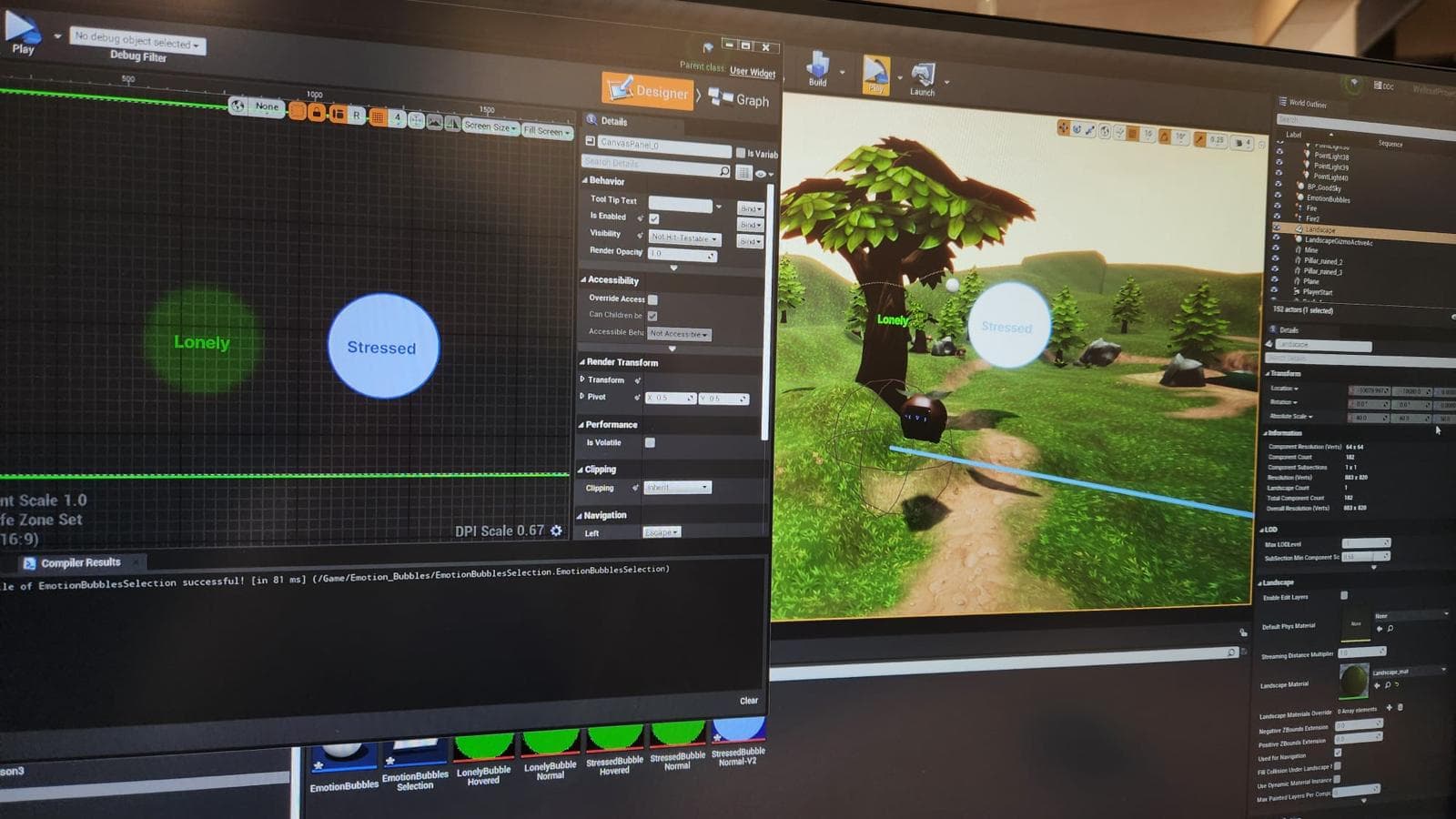
The team translated the experience model into a working Unreal environment while coordinating research, development, environment art, character art, and audio.
No one on the team had used Unreal before, so the build included learning the toolchain while producing the prototype.
- Research findings
- Experience spec
- Dialogue branches
- Unreal environment
- Avatar + interaction
- Meditation
- Showcase build
Validation
We put the experience in front of people before calling it finished.
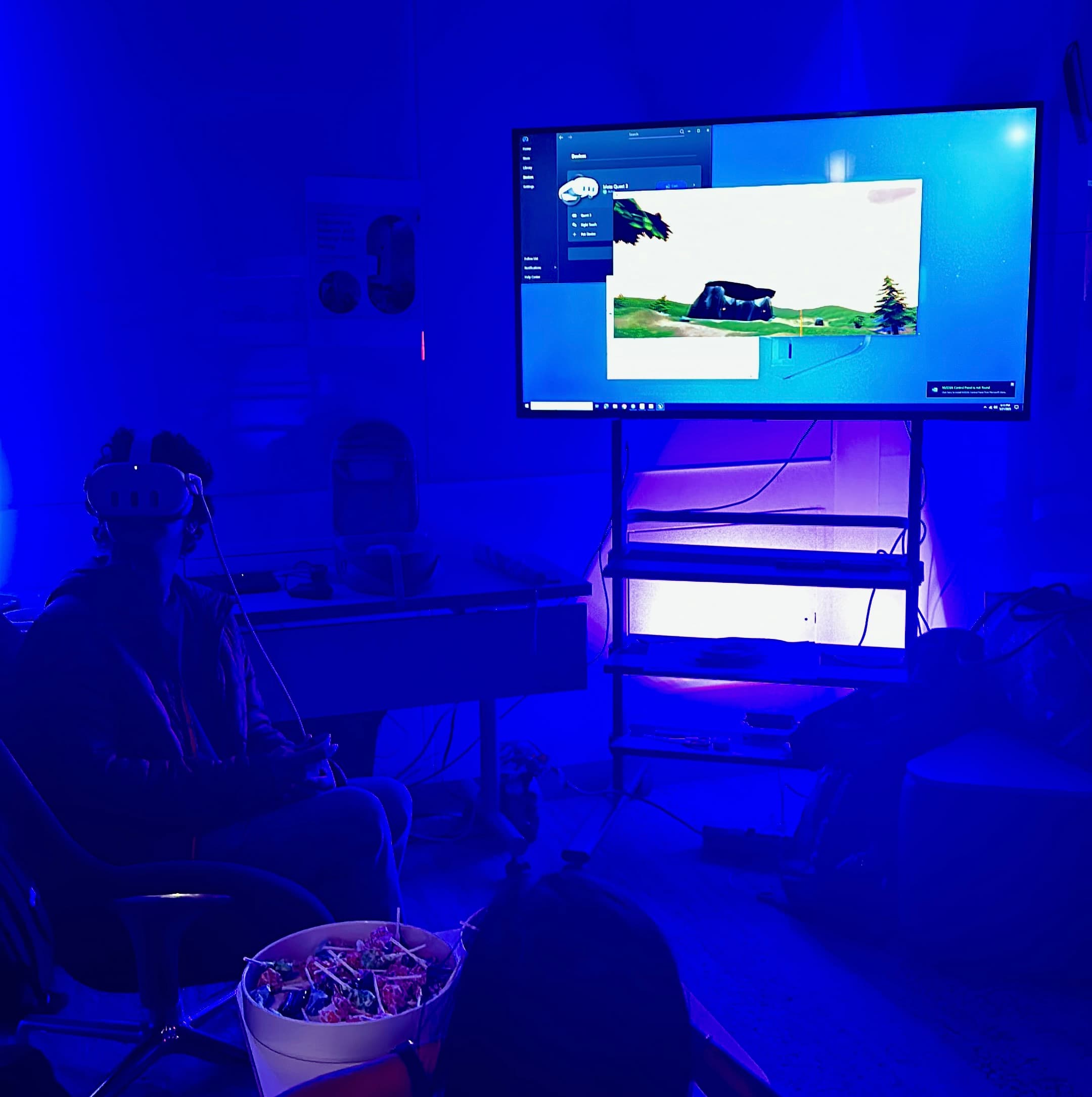
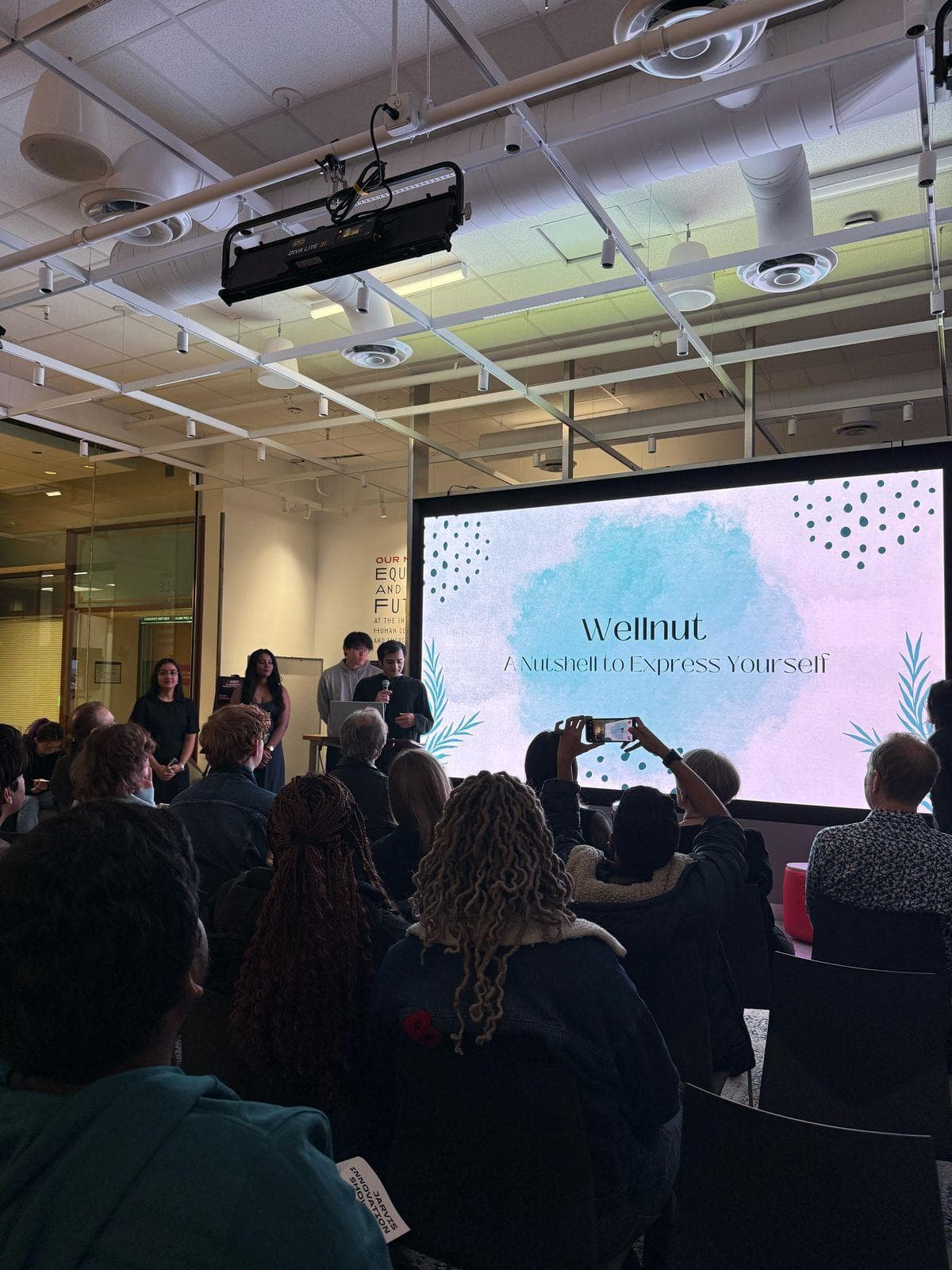
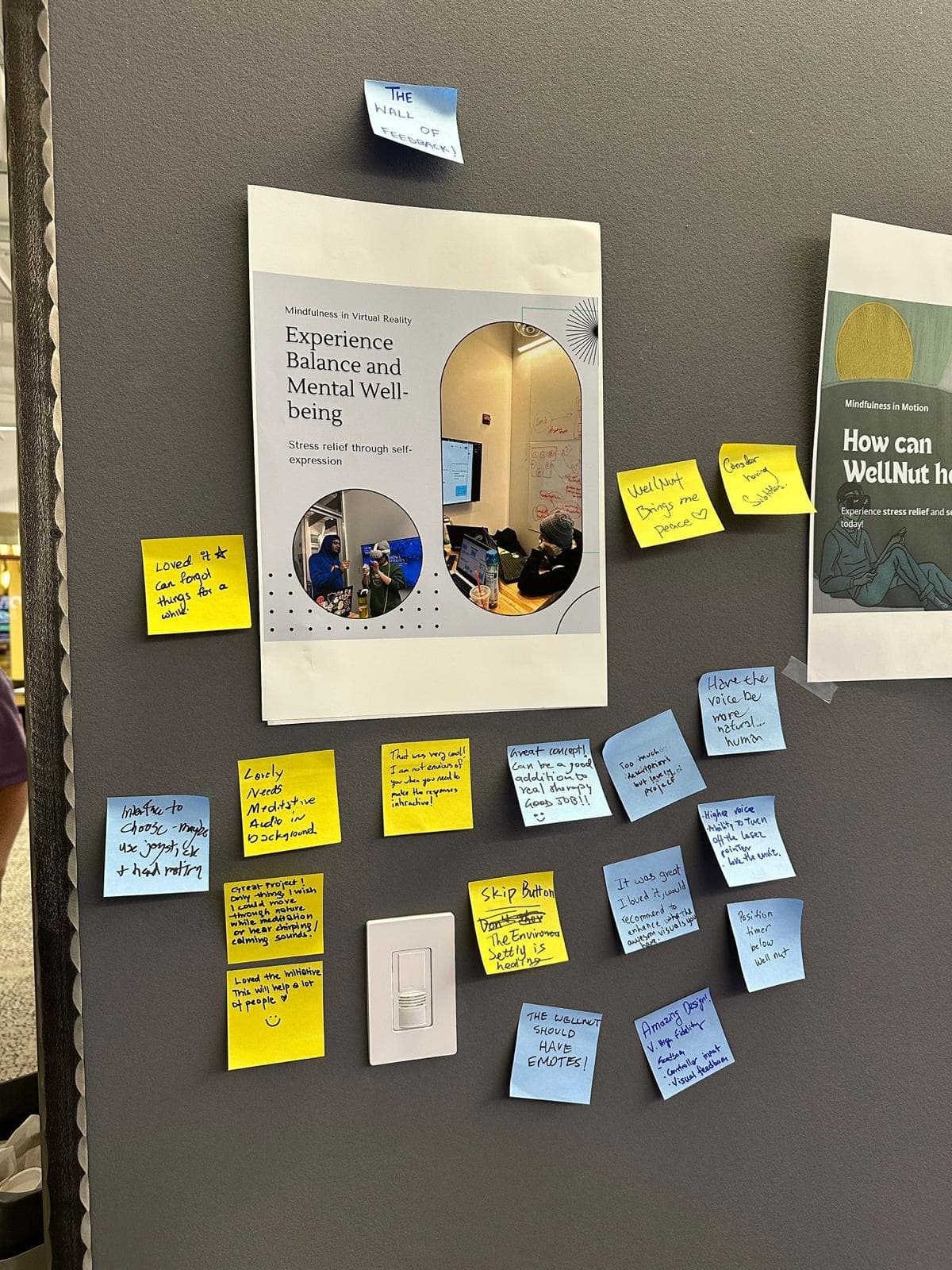
The prototype was exhibited at the Jarvis Innovation Showcase in May 2025. Attendees put the headset on, went through the experience, and left feedback directly on a Wall of Feedback.
“This feels like talking to someone who actually cares.”
The notes also asked for things the MVP didn’t have: meditative background audio, a skip button, a more natural voice, emotes for the avatar. That list became the clearest brief for what to build next.
Impact
The prototype moved the idea from research into something people could actually experience.
The strongest result wasn’t a scale metric. It was moving from an abstract problem — students aren’t using the support that exists — to a tangible experience built around the actual barriers.
- students informed the product direction
- 33
- pre-validated VR interest, before the product existed
- 71%
- from literature review to live showcase
- 6 months
- team members onboarded to Unreal with no prior experience
- 5
If this shipped
The real test would be whether students choose to come back.
Wellnut is a prototype, not a deployed clinical or commercial service. There are no treatment outcomes or adoption numbers to claim.
The right success criteria would be behavioral.
Return use
Do students voluntarily come back after the first session?
Completion
Do they finish the journey from emotion selection through guided practice?
Perceived safety
Does it feel private, non-judgmental, and appropriately bounded?
Help-seeking
Does Wellnut make professional support easier to approach, rather than replacing it?
Trust
Do users understand what the avatar can and cannot do?
Before scaling
The prototype answered some questions. It also exposed the next ones.
Research scope
A self-selected sample from a single institution. Findings are directional, not generalizable.
Long-term behavior
Showcase feedback is not evidence of sustained engagement.
Clinical boundaries
Wellnut should never be positioned as therapy or a replacement for professional care.
Dependence and escalation
A conversational companion needs guardrails around dependency, escalation, and referral to human support.
Technical expansion
Voice AI, biometrics, mood tracking, and additional environments each require separate evaluation.
What’s next
The next phase is broader validation, not simply more features.
Validate
Test with a broader, multi-institution sample, including students who have actively sought support.
Refine
Evaluate conversation quality, trust, perceived privacy, and whether acknowledgement changes engagement.
Expand carefully
Explore voice interaction and adaptive experiences only after the core interaction is validated.
Scale the evidence before scaling the feature set.
Final thoughts
The hardest part wasn’t building VR. It was giving students a reason to take the first step.
Wellnut started with a behavioral gap, not a technology brief: support existed, but many students were not ready to use it.
Research shaped the platform, the interaction model, the ethical boundaries, and the scope — turning that insight into a prototype students could actually experience.
Invisible Impacts